Illustration of a fixed-wing unmanned aircraft climbing away from a wheeled pneumatic launch rail in an open field at twilight

Unmanned systems · U.S. national defense

Unmanned systems that move from field development to mission operations.

Legion UxS builds and operates unmanned aircraft, payloads, and mission software for U.S. national defense and trusted allied mission collaboration.

Primary focus
Airborne ISR & strike
Mission software
Planning & execution
Operating environment
Contested spectrum
Sourcing posture
U.S.-resourced

Mission

Built for U.S. missions. Designed to operate with trusted allies.

Legion UxS develops and operates unmanned systems for U.S. national defense and trusted allied mission collaboration. We focus on airborne ISR, strike systems, mission planning systems, and spectrum operations designed for real-world deployment — with unmanned ground and maritime systems planned as follow-on capabilities.

U.S.-aligned by design

Architectures, sourcing, and integration decisions are made against U.S. defense priorities first — not retrofitted for them later.

Coalition-ready

Systems are structured so allied partners can plan, launch, and operate alongside U.S. forces and carry a real share of the collective defense burden.

Fieldable over theoretical

Capability is proven by what launches, flies, survives contested conditions, and recovers — measured in flight hours, not slideware.

Operator-informed

Development cycles are driven by the people who plan the mission, launch the aircraft, and work the spectrum at the tactical edge.

Capabilities

Four pillars, one integrated mission stack.

Each pillar is delivered as a fieldable capability rather than a concept — developed, integrated, and operated by the same team.

01

Airborne ISR

Persistent intelligence, surveillance, and reconnaissance from unmanned aircraft configured for the mission, not the brochure.

  • Electro-optical & thermal sensing
  • Payload integration & calibration
  • Deployable ISR workflows
  • Sensor-to-decision timelines

02

Strike Systems

Precision effects tied directly to ISR, so detection, decision, and employment stay inside one operational loop.

  • Precision effects integration
  • ISR-to-strike sequencing
  • Attritable airframe design
  • Terminal guidance pathways

03

Mission Planning Systems

Integrated planning and execution tooling for routing, communications, mission calculation, and coordinated multi-aircraft operations.

  • Route & airspace planning
  • Coalition mission coordination
  • C2 and telemetry integration
  • Contingency & abort logic

04

Spectrum Operations

Planning, management, and protection across the electromagnetic operational environment — where modern missions are actually won or lost.

  • Spectrum planning & deconfliction
  • Resilient C2 and data links
  • RF-aware autonomy behaviors
  • Degraded-link operations
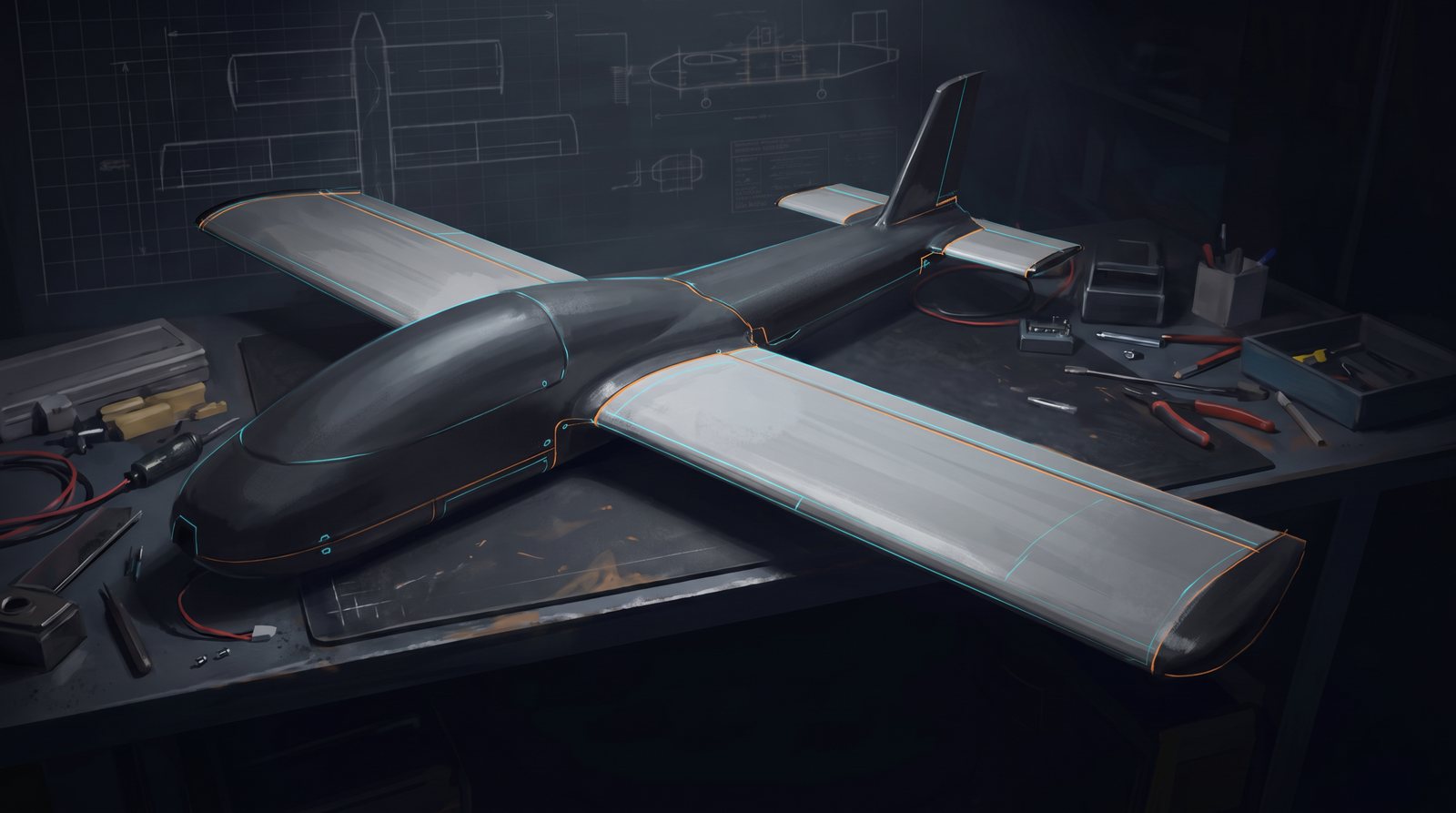
Illustration of a fixed-wing unmanned aircraft airframe on a workbench with design drawings behind it and electronics and hand tools alongside

Development

Airframes, payloads, and software built to be fielded.

Development runs as a continuous loop between design, build, and flight — with manufacturability treated as a design input rather than a downstream problem.

  1. Parametric airframe design CAD-driven structures sized for mission profile, payload volume, and production reality.
  2. Composite & additive production Wing and fuselage structures engineered for repeatable layup, tooling, and scalable output.
  3. Payload & radio integration Sensors, links, and edge compute integrated as one system — power, thermal, and RF budgets included.
  4. Flight test & iteration Every revision earns its place through instrumented flight, not review cycles.
Illustration of a pickup-based field site at twilight with a rooftop shelter, awning, antenna mast, laptop ground station, and a fixed-wing aircraft on its launch rail

Operations

The same team that builds it operates it.

Operational experience feeds straight back into engineering, which shortens the distance between a field problem and a fielded fix.

  1. Plan Mission routing, spectrum deconfliction, and coalition coordination before wheels up.
  2. Launch Rail, runway, and austere-site launch and recovery with a minimal operator footprint.
  3. Sense & decide ISR collection and on-board processing that produce decisions, not just pixels.
  4. Sustain Field maintenance, spares, and operator training that keep systems on mission.
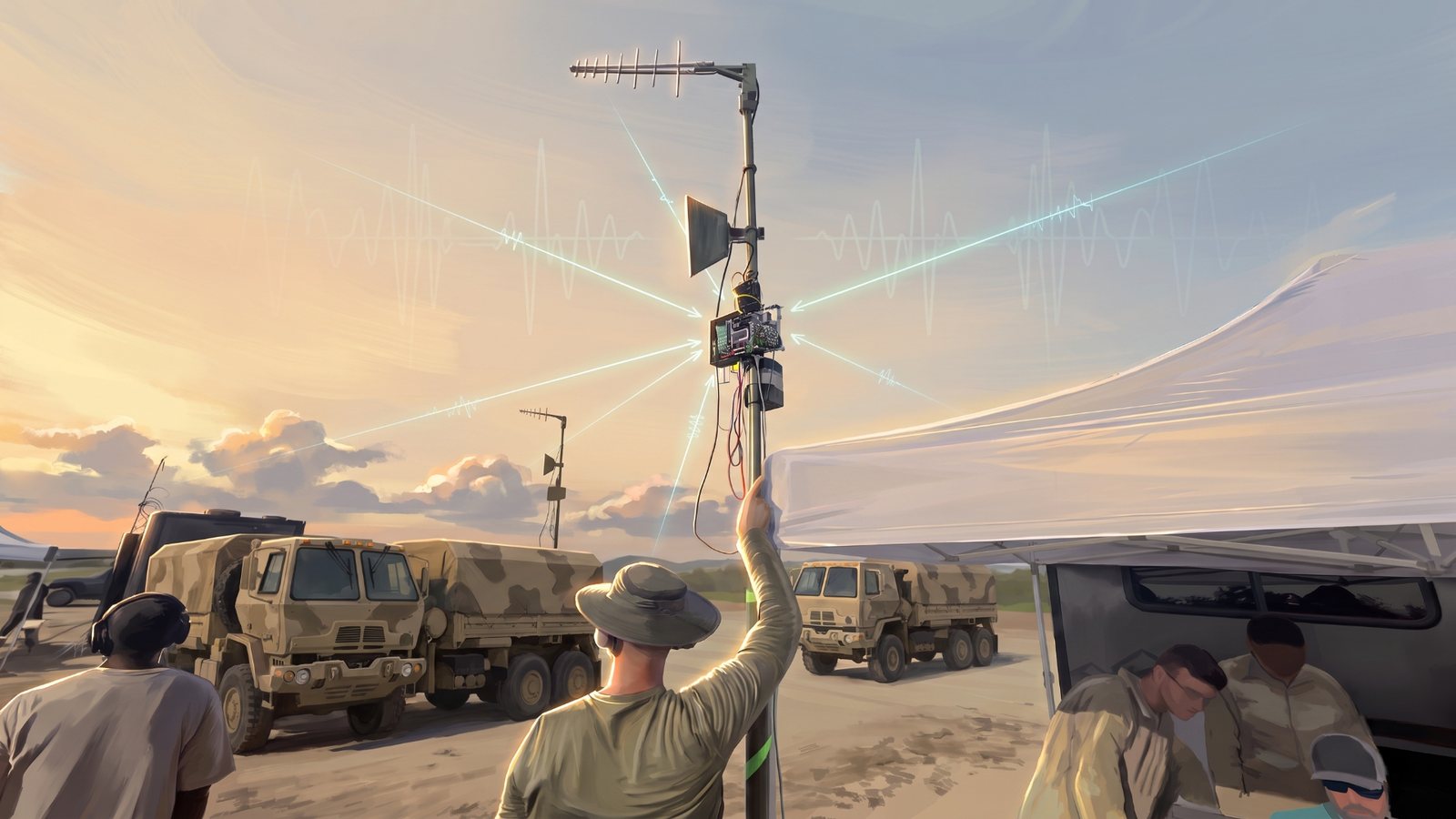
Illustration of a field team raising a portable antenna mast with directional and panel antennas, signal traces radiating across the sky

Contested environment

Assume the spectrum is contested. Operate anyway.

Communications, situational awareness, targeting, and navigation all depend on the electromagnetic spectrum. Our systems are designed for the case where that spectrum is denied, degraded, or actively contested.

  1. Link diversity Layered RF, cellular, and satellite paths so no single link is a single point of failure.
  2. Graceful degradation Defined autonomous behavior when the link thins out — not an unrecoverable aircraft.
  3. Emissions discipline Planning tools that treat the aircraft's own signature as a managed mission variable.

Domains

Air now. Ground and maritime next.

We lead with what is operationally relevant today and expand deliberately, rather than claiming equal depth across every domain at once.

Unmanned Air

Operational

Airborne ISR and strike platforms, payload integration, mission planning, and spectrum-aware operations — our current center of gravity.

Unmanned Ground

Coming soon

Ground platforms sharing the same mission planning, autonomy, and spectrum foundations as our airborne systems.

Unmanned Maritime

Coming soon

Surface and subsurface systems extending persistent sensing and effects into the maritime domain.

Trusted mission ecosystem

An integrated capability base behind a single point of accountability.

Legion UxS operates within a broader base of trusted, U.S.-aligned engineering, manufacturing, RF, and mission-support capability. It lets us design, validate, source, build, and field with far less friction than our size would suggest.

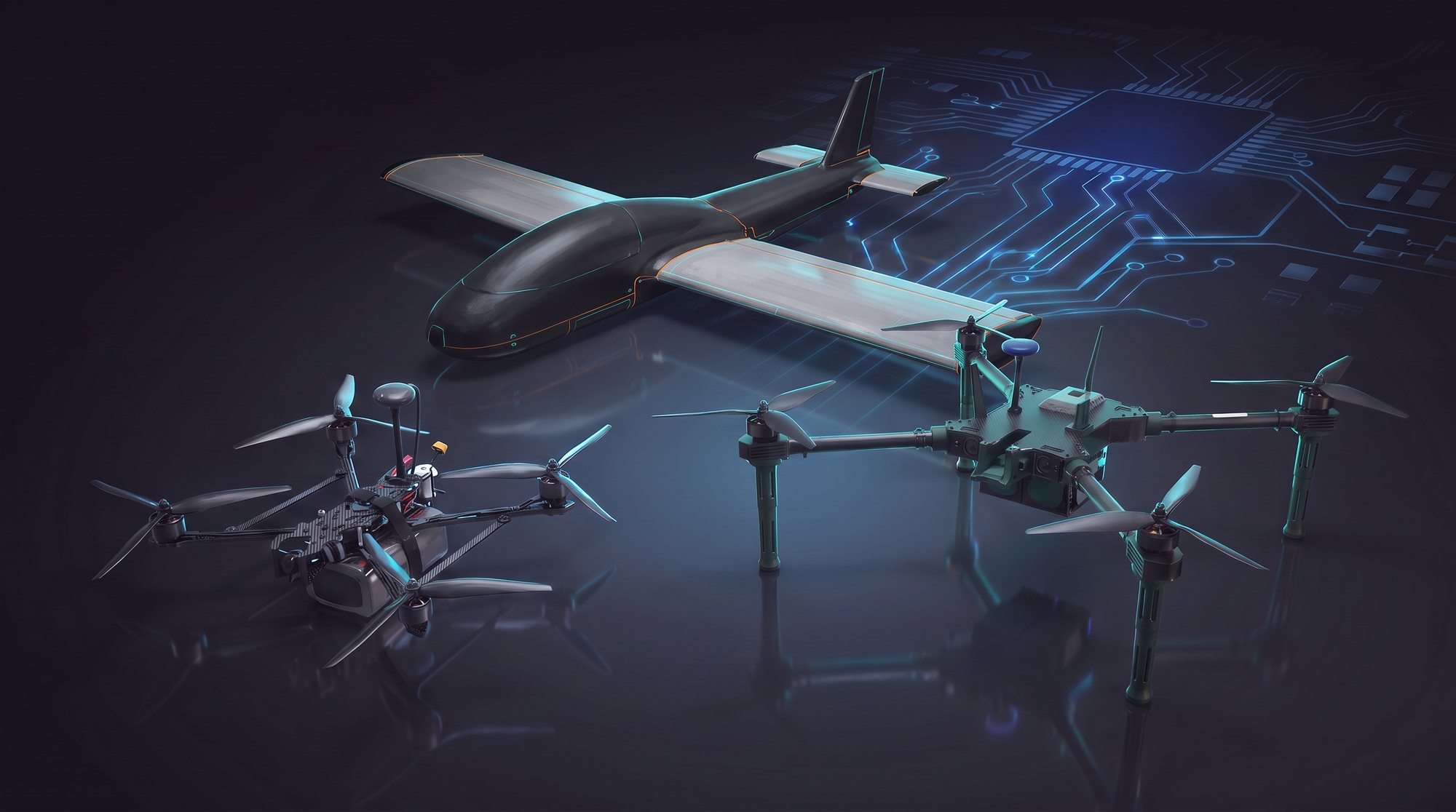
Illustration of the Legion fleet: a fixed-wing unmanned aircraft and two multirotor aircraft with integrated compute, navigation, and antennas, set against a circuit-trace background
Integration reference Airframe, autonomy compute, navigation, and RF treated as one integrated system rather than parts bolted together late.

Airframe & structures

Wing and fuselage redesign, composite tooling, prototyping, CNC and machining, and scalable production engineering.

Additive manufacturing

3D-printed tooling and flight structures that compress iteration time between design revisions and flight test.

RF & communications

U.S.-built 4G/5G, O-RAN, antenna, FPGA, and embedded Linux networking for mission communications and government spectrum.

Spectrum & EW

Spectrum operations, RF engineering, wireless analysis, electronic warfare evaluation, and cyber-electromagnetic support.

Counter-UAS

Sovereign, hardware-agnostic detection, tracking, and response workflows for critical infrastructure defense.

Autonomous effects

Combat-informed autonomous strike, loitering munition, and precision effects experience applied to real operational urgency.

Embedded & edge compute

Firmware, embedded systems, and edge processing that move decision-making onto the aircraft.

Training & sustainment

Operationally grounded technical instruction for the crews who plan, fly, maintain, and work the spectrum.

Compliance-aware sourcing. Part of that capability base supplies U.S.-resourced, NDAA-compliant unmanned systems components. Country of origin and critical subsystem sourcing materially affect compliance, so we treat the bill of materials as a program requirement from the start rather than a certification exercise at the end.

Contact

Request a briefing.

We work with U.S. government programs, prime contractors, and trusted allied defense organizations. Tell us the mission problem and we will tell you candidly whether we are the right team for it.

  • Capability briefings for program offices and prime teaming partners
  • Flight demonstration and field evaluation coordination
  • Subcontracting, teaming, and supplier qualification inquiries
UEI
N2CNKZQ7TAV3
CAGE
26F29

Please do not submit classified or export-controlled information through this form.